
Small Claims Court: When You Don’t Need a Lawyer
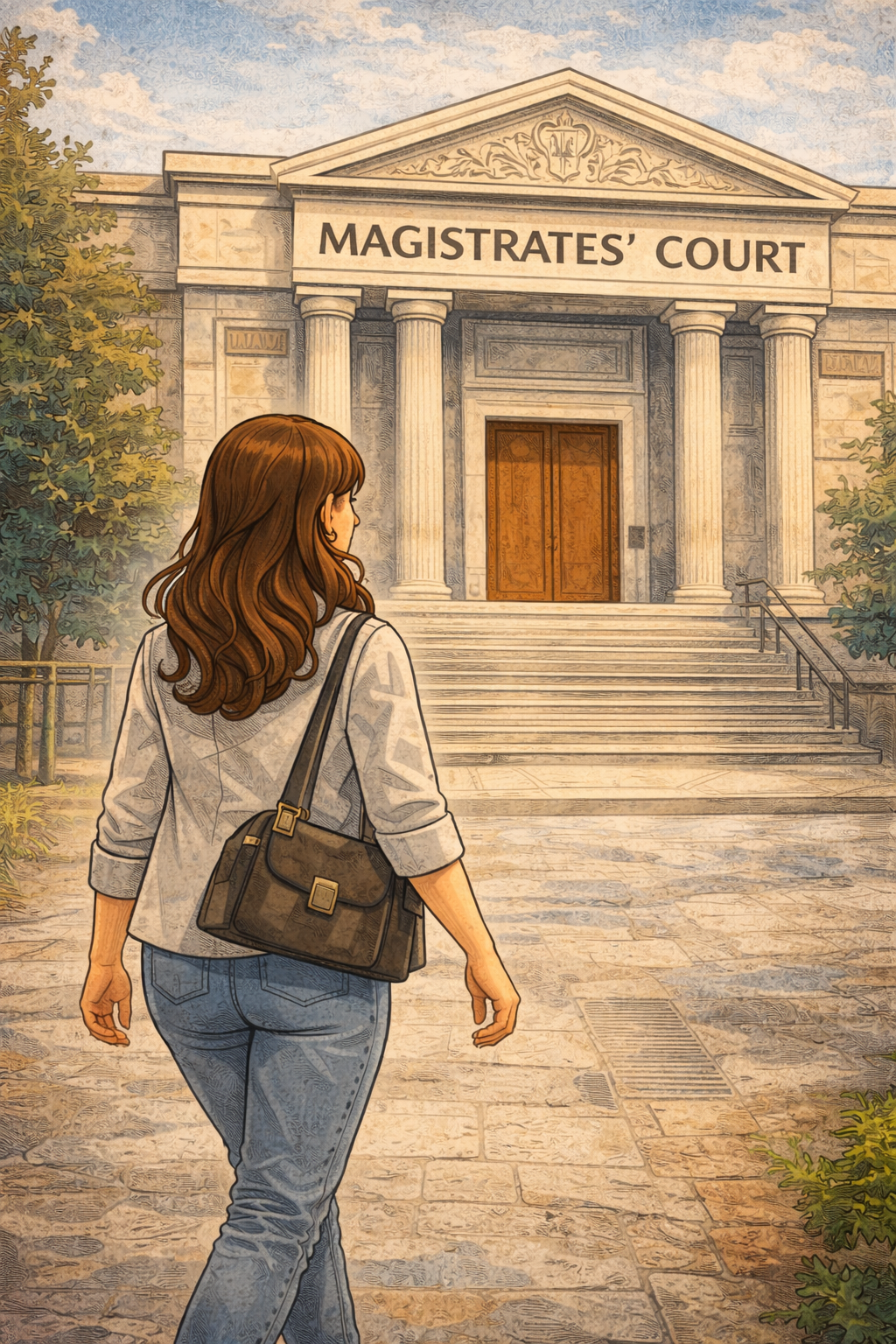
When someone owes you money, the first instinct is usually to let it go, especially if the amount feels “too small” to justify legal fees or the hassle of hiring a lawyer. Many people assume that going to court automatically means high costs, long delays, and complicated procedures.
What most people don’t realise is that for small claims, the court process is intentionally kept simple. There is a specific procedure designed for straightforward money disputes, where you are allowed to bring the claim without a lawyer. This allows individuals to seek recovery of small sums of money in a faster and more affordable way.
In What Situations Can a Small Claim Be Brought?
The small claims procedure is governed by Order 93 of the Rules of Court 2012. It is a special procedure available only in the Magistrates’ Court and applies strictly to claims not exceeding RM5,000.
While the Magistrates’ Court generally has jurisdiction to hear claims involving much higher sums, Order 93 creates a simplified process specifically for small-value, straightforward disputes, where parties are expected to represent themselves without legal representation. The objective is to provide a faster and more cost-effective avenue for individuals to recover small debts.
A small claim may be brought where the dispute involves a fixed and ascertainable sum of money, and where the issues can be resolved without complex legal arguments.
The emphasis under Order 93 is not on technical pleadings, but on whether the debt exists, remains unpaid, and can be supported by evidence such as receipts, invoices, messages, or agreements.
Because the procedure is intended for self-represented parties, it is not suitable for disputes that involve:
claims exceeding RM5,000
complicated questions of law or heavily disputed facts
matters requiring expert evidence or extensive witness testimony
Although companies and limited liability partnerships cannot commence proceedings under Order 93, they may be sued as defendants, provided the claim itself falls within the small claims limit.
Illustrative Scenarios for Small Claims

Scenario 1: Unpaid Personal Loan
Aisyah lent RM2,000 to her friend, Daniel, after he said he needed short-term financial help. Daniel agreed to repay the amount within six weeks. Despite follow-ups and messages acknowledging the debt, no repayment was made.
As the sum owed is fixed and below RM5,000, this situation is suitable for a small claim.
Scenario 2: Unpaid Services
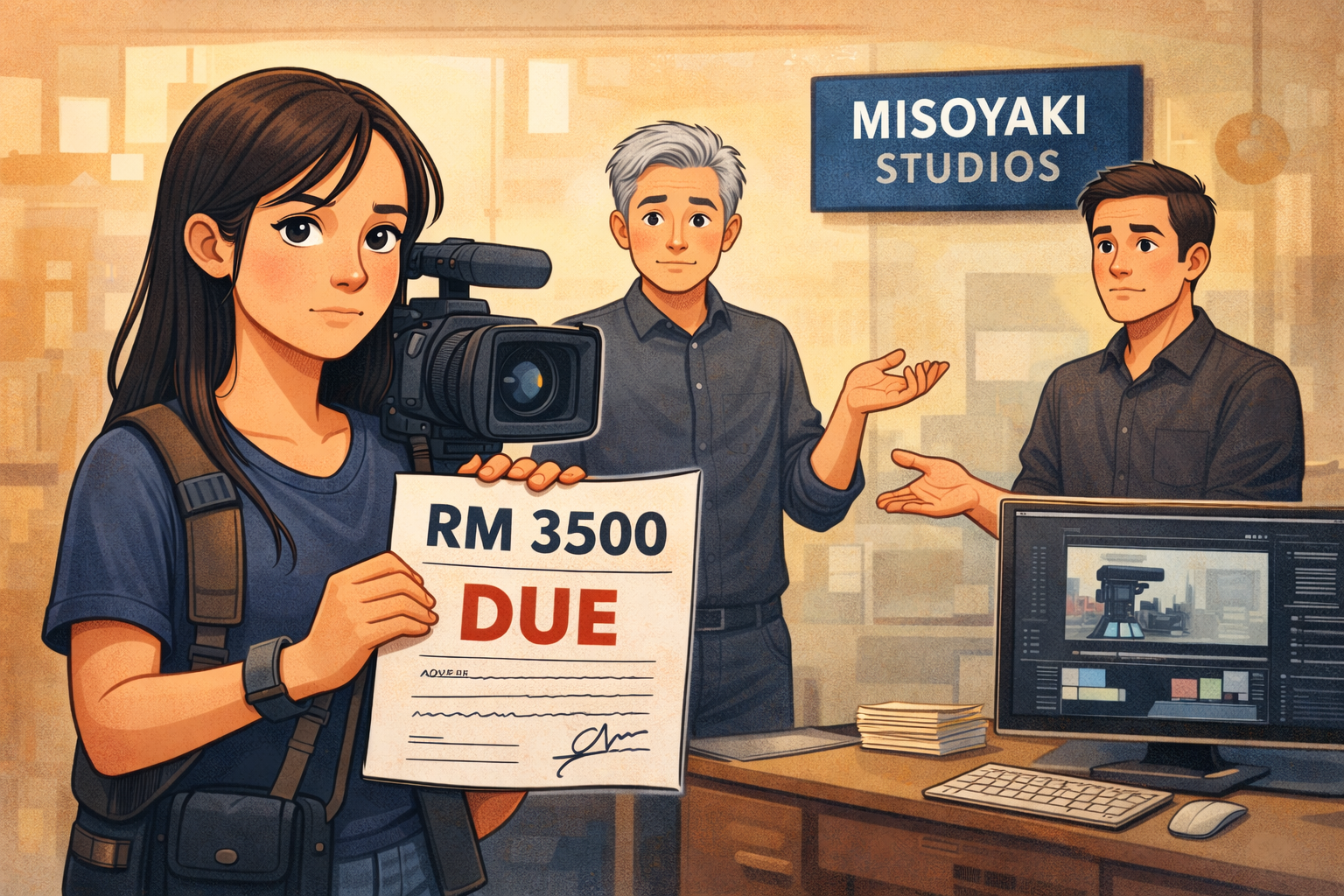
Sarah, a freelance videographer, was engaged by Misoyaki Studio to produce promotional videos for a marketing campaign. The agreed fee was RM3,500. The videos were delivered in full, but payment was never made despite repeated reminders.
This is a suitable case for a small claim as it involves services rendered and a specific sum owed.

Scenario 3: Deposit Not Refunded
Aiman paid a RM1,200 booking deposit to Sorbae Fitness Sdn. Bhd. for a three-month personal training programme. The programme was later cancelled by the company due to internal scheduling issues, but the deposit was not refunded.
This may be brought as a small claim as it involves a refundable deposit and a clearly defined amount.

Scenario 4: Acknowledged Debt with Delayed Payment
Sheliz was engaged by Oreo Home Solutions to create promotional content showcasing the company’s renovation projects, for an agreed fee of RM4,500. The content was produced and delivered in full as agreed.
After delivery, Oreo Home Solutions acknowledged the outstanding payment and informed Sheliz that the amount would be settled by instalments. Despite this acknowledgment, no payment was ultimately made.
A small claim may be brought where a debt has been acknowledged but remains unpaid.
What Is the Procedure for Bringing a Small Claim?
Small claims are commenced in the Magistrates’ Court under Order 93 of the Rules of Court 2012, following a simplified court process intended for self-represented parties.
While the procedure is less formal than ordinary civil proceedings, there are still clear steps that must be followed.
1. Filing the Claim
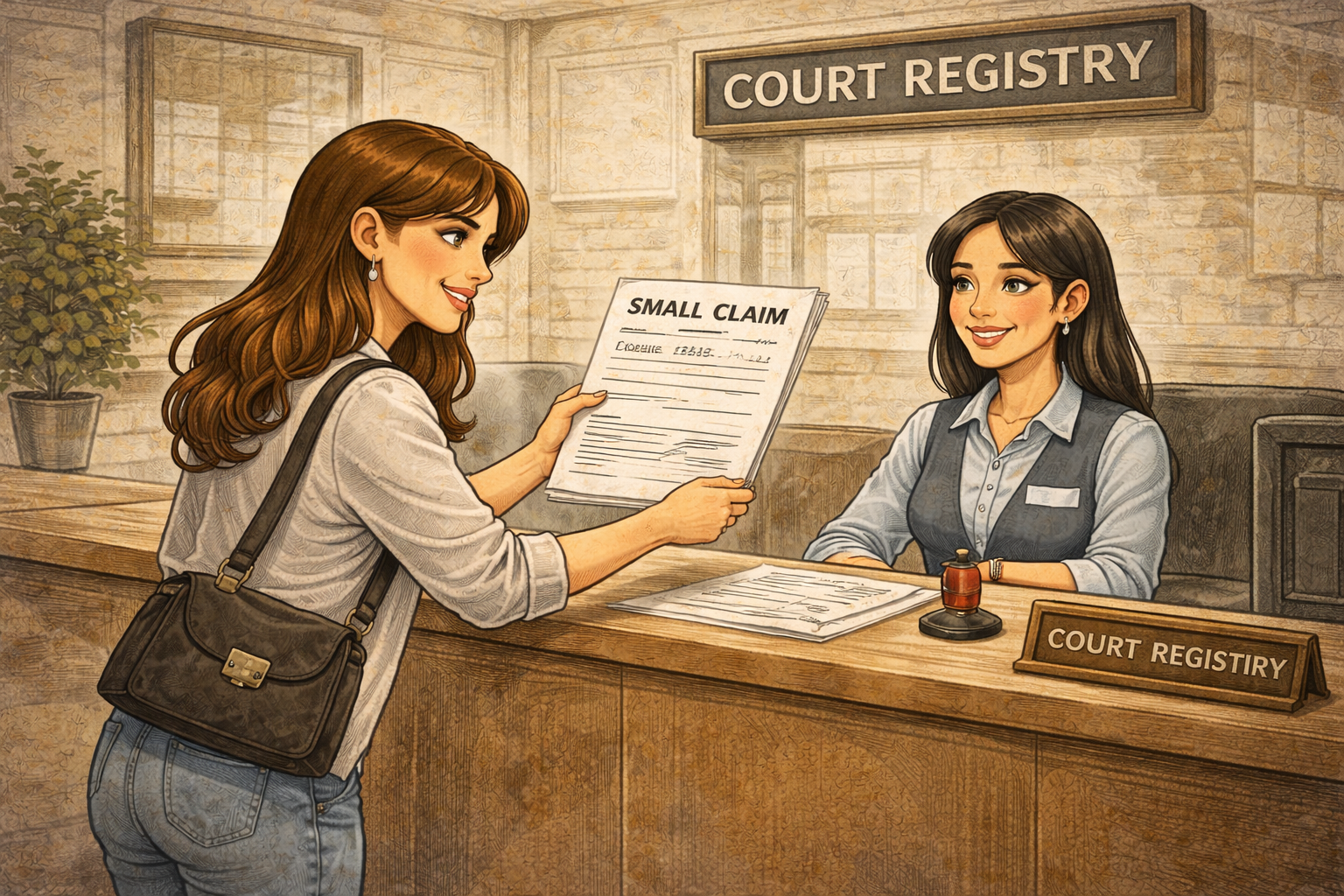
To begin, the Plaintiff must file the small claim at the Magistrates’ Court nearest to the Defendant’s address. The Plaintiff may approach the court registry and inform the court staff that they intend to file a small claim.
The court will then provide Form 198, which is the prescribed form for commencing a small claim.
In Form 198, the Plaintiff is required to state:
the amount being claimed (not exceeding RM5,000), and
a detailed clear explanation of how the claim arose.
2. Payment of Court Fee and Sealing of Documents
Once Form 198 is completed, it is filed with the court together with the prescribed filing fee. The fee is relatively minimal compared to ordinary civil proceedings.
After filing, the court will seal the documents and fix a hearing date.
3. Service on the Defendant
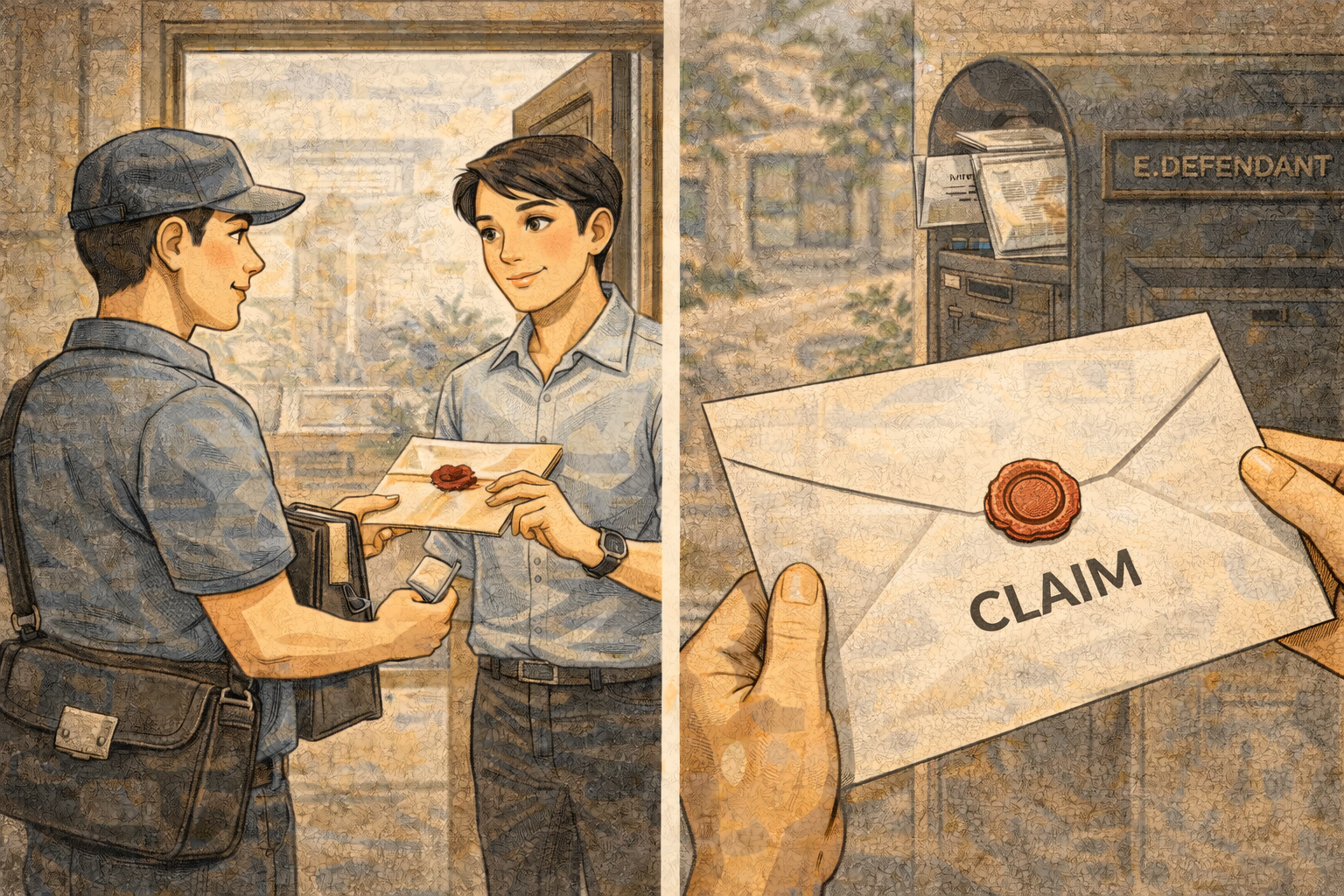
After the claim is filed and sealed, the Plaintiff must ensure that a copy of the sealed Form 198 is served on the Defendant.
Service may be effected either:
by delivering the document personally to the Defendant or their representative at the last known address, or
by sending it via prepaid registered post to the Defendant’s last known address.
Proof of service is important, as the court may not proceed if the Defendant was not properly notified of the claim.
4. Defence and Counterclaim
Upon receiving the claim, the Defendant may file a Defence and, if applicable, a Counterclaim using the prescribed form.
If the Defendant files a counterclaim, the Plaintiff is entitled to respond to it. However, if the counterclaim exceeds RM5,000, the small claims procedure will no longer apply, and the matter will proceed as an ordinary civil claim, where legal representation is permitted.

5. Court Hearing
If the Defendant disputes the claim, the court will fix one or more hearing dates.
At the hearing:
both parties present their case personally,
lawyers do not appear on behalf of the parties, and
the magistrate may ask questions to clarify the facts.
Parties are expected to support their case with relevant documents, which may include invoices, receipts, delivery records, agreements, messages, emails, photographs, or other relevant evidence.
If the Defendant fails to file a defence or does not attend the hearing despite being properly served, the court may proceed to decide the case in their absence.
6. Decision and Costs
If the Plaintiff successfully proves the claim, the court may enter judgment in the Plaintiff’s favour. The court may also award costs, although such costs are capped and kept minimal under the small claims procedure.
Decisions in small claims matters are generally final, with very limited avenues for appeal.
Common Mistakes People Make in Small Claims Court
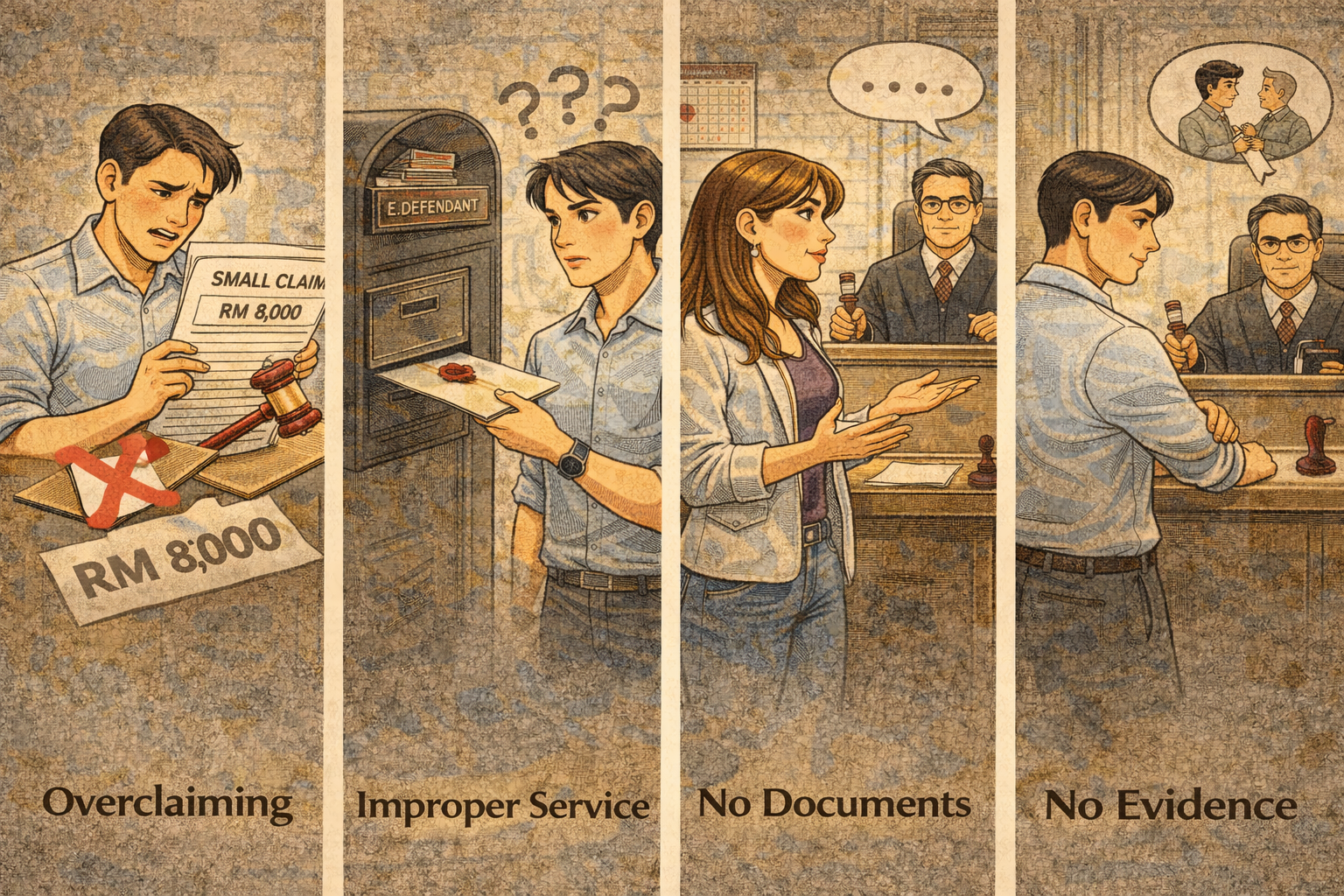
Although the small claims procedure is designed to be simple, many claims fail because of avoidable mistakes rather than the lack of a genuine debt. Some of the more common pitfalls include:
Claiming more than RM5,000
The small claims procedure applies strictly to claims not exceeding RM5,000. Where a claimant attempts to recover a higher amount, the court may strike out the claim or direct that it be brought under the ordinary civil procedure instead.Improper service of court documents
Failing to properly serve Form 198 on the Defendant is a frequent issue. Without proof of service, the court may refuse to proceed, even if the claim itself is valid.Turning up to court without documents
Many claimants assume that explaining the situation verbally is sufficient. In reality, the court expects documentary support such as receipts, invoices, messages, or agreements. A claim without evidence is unlikely to succeed.Relying solely on verbal promises
While verbal agreements are not automatically invalid, they are harder to prove. Claims based purely on “he promised to pay” often fail where there is no supporting evidence.Assuming the court will chase the Defendant
The court does not act as a debt collection agency. It is the Plaintiff’s responsibility to prosecute the claim, attend hearings, and take enforcement steps if necessary.
These mistakes highlight why preparation and procedural compliance are critical, even in a simplified process.
What Happens After You Win (or Lose)?
At the conclusion of a small claims hearing, the court may deliver its decision immediately or after considering the evidence.
If the Plaintiff succeeds, the court may:
enter judgment in favour of the Plaintiff, and
award costs to the successful party, subject to a statutory cap (currently up to RM100).
If the Defendant still fails to pay after judgment is entered, the Plaintiff may consider enforcement options under the law. Enforcement is a separate process and may involve additional applications, depending on the circumstances of the case.
If the Plaintiff does not succeed, the claim will be dismissed. Small claims decisions are generally final, with very limited scope for appeal. This underscores the importance of presenting a clear and well-prepared case from the outset.
Conclusion
The small claims procedure exists to make resolving straightforward money disputes less intimidating and more accessible without the need for lawyers to appear in court. For the right kind of case, it offers a quicker and more cost-effective alternative to a full-blown civil suit.
That said, “simple” does not mean careless. The process is still governed by court rules, and outcomes often turn on preparation rather than the size of the claim. Even where a debt is genuine, how the claim is framed, supported, and presented can make all the difference.
Knowing when a small claim is appropriate, how the process works, and where its limits lie helps avoid wasted time and unnecessary frustration. And where there is uncertainty, a little legal advice early on can go a long way in keeping the claim on track.